
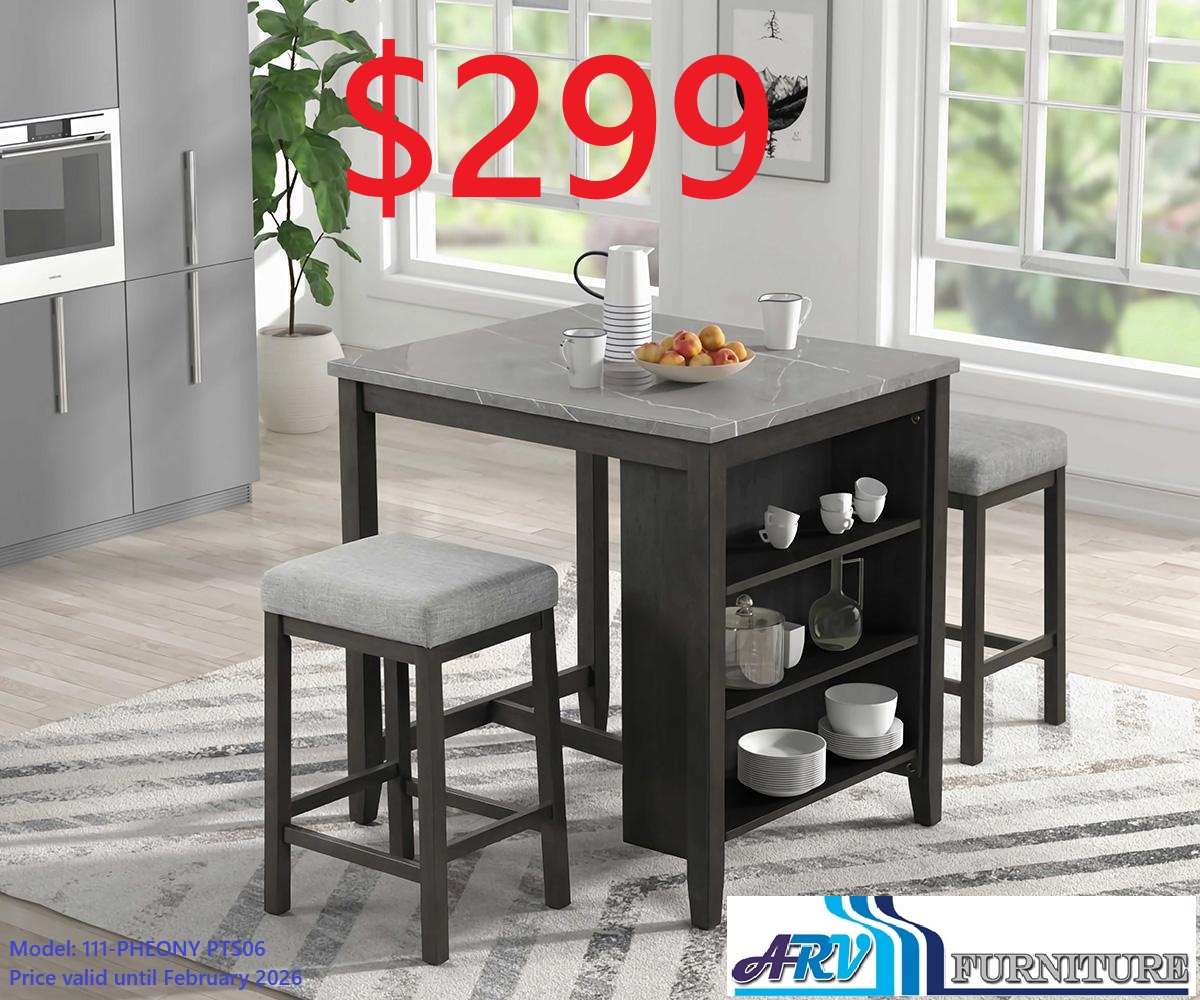
🍽️ 1. Maximize Space Without Blocking Traffic
In a small kitchen, opt for a counter-height set (approximately 34–36 inches in table height) with stools that tuck fully under the table when not in use. That frees floor space and keeps the room feeling bigger.
Leave at least 36 inches of walking space around the seating area, if possible, so people can move comfortably while someone is seated.
🍳 2. Double as Prep Surface
A counter-height table can serve as extra counter space for food prep, adding a working surface near your main kitchen counters — great for chopping, plating, or staging dishes.
If it aligns with your counters, it can create a seamless workspace.
☕ 3. Casual Eating & Social Spot
Use the set for quick meals (breakfasts, snacks), doing homework, or morning coffee — this keeps everyday traffic out of your main prep area.
Compact stools mean more room for socializing without bulky chairs.
📐 4. Choose the Right Size & Height
Counter stools should generally be 24–26″ seat height for a 34–36″ table, giving good leg room.
Backless or low-profile stools keep sightlines open and fit better in narrow layouts.
💡 5. Flexibility & Flow
Round or narrow tables help in tight galley kitchens — they reduce sharp corners and make movement around them easier.
If possible, put the table against a wall or window space when not in use to open up the main kitchen traffic zone.
🔄 6. Multi-Purpose Design
Small counter table sets can also act as a home office nook, breakfast bar, or kids’ homework spot — making the most out of limited square footage.
🧠 Quick Layout Tip
Before placing the set, use painter’s tape to outline where the stools go when pulled out. This gives a visual feel of how much space you’ll need and avoids tight spots that block cabinets or doors.
